
On 21 May 2026, the Health Council of the Netherlands and the Netherlands Scientific Climate Council published their joint advisory report ‘Climate Change and Health: Directions for policy’. In the advice, both councils recommend for policies that reduce the increasing health risks due to climate change and ensure better preparedness for new risks in the future. The climate is changing, and faster than expected. Current policies do not provide sufficient protection for the population. The councils recommend starting with policies for groups of people that have difficulty avoiding or adapting to climate change. The Dutch Caribbean also deserves priority because the climate-related health risks are greater here.
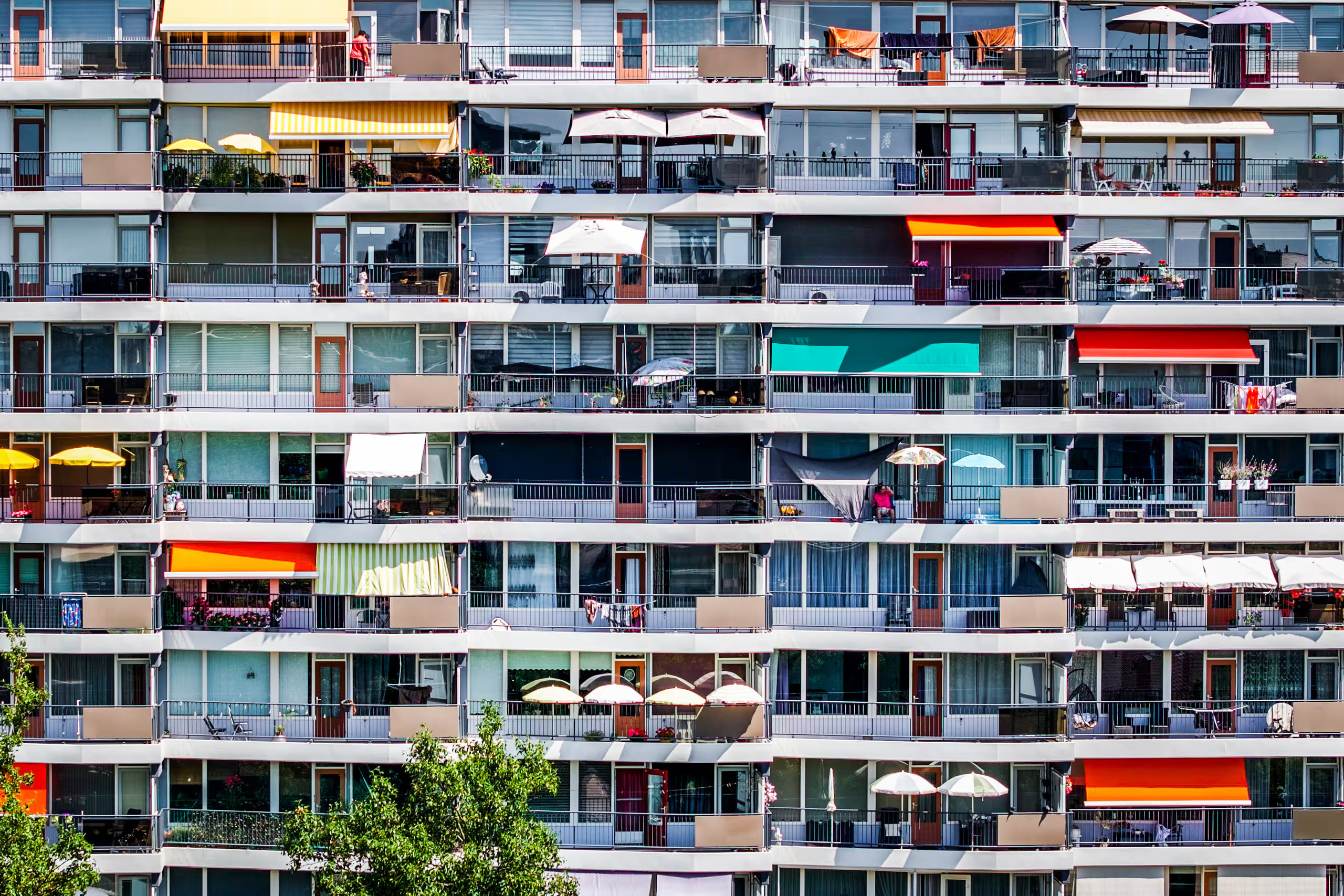
Image: © Jeffrey Groeneweg/ANP
New and existing health risks associated with climate change
Extreme weather events, such as heatwaves and downpours, are becoming more frequent and intense as a result of climate change. This increases the health risks on two levels. Climate change is exposing people to greater levels of existing risks: high temperatures, UV radiation, summer smog, pollen, and known infectious diseases. This leads to a higher risk of, for example, heat stress, skin cancer, respiratory problems and hay fever. In addition, new risks are emerging: the likelihood of outbreaks of existing and new infectious diseases is increasing.
Mental health issues
Health problems related to climate change can also be mental in nature. Issues caused by heat include difficulty concentrating and increased aggression. People may also experience mental health issues due to, for example, concerns about potential loss of income or damage to their homes’ foundations, or about the growing overall threat posed by climate change. People who have experienced a climate disaster may suffer from depression, anxiety and symptoms of post-traumatic stress.
Unjust health inequalities
Some groups in society are at greater risk than others. There are groups of people who are unable, or find it difficult, to avoid or adapt to climate change. For example, people with limited (financial) resources or opportunities to make their rented homes climate-proof, children in a hot school building, or workers who work outdoors in the heat and sun. This further exacerbates existing health inequalities.
Special focus on the Dutch Caribbean
The Dutch Caribbean is among the regions most vulnerable to the effects of climate change worldwide. It is already very hot, and rising temperatures are leading to greater health risks on Bonaire, Sint Eustatius and Saba than in the European Netherlands. In addition, there are increasing health risks from both new and existing infectious diseases, such as dengue. Furthermore, climate change is manifesting itself in more severe hurricanes, heavy rainfall and flooding due to rising sea levels.
All of this places an additional strain on the healthcare system and on food and drinking water supplies, which are already under pressure. A relatively large proportion of people also live in unfavourable socio-economic circumstances, are less able to adapt to or avoid the risks.
Recommendations
Current policy is not yet sufficiently addressing the rise in known and emerging health risks. The councils recommend developing preventive policies to reduce health risks and to be better prepared for new risks. By establishing long-term responsibilities and funding, these preventive policies can become structural. As measures fall within policy areas other than public health, it is important that ministries cooperate effectively.
General recommendations for health policy in a changing climate
- Implement structural and coherent policy to protect people from the health risks of climate change, now and in the future.
-
Prioritise policy development for groups that find it difficult to adapt to or avoid health risks, or to recover from health damage.
-
Prioritise policy development for residents of the Dutch Caribbean.
Recommendations regarding people’s living conditions
- Make homes resilient to heat and other climate risks, starting with rental properties.
- Make buildings used for education and long-term care resilient to heat and other climate risks.
- Make neighbourhoods resilient to heat and other climate risks, starting with neighbourhoods where people face the highest health risks.
Recommendations regarding working conditions
- Ensure that climate risks are better embedded in occupational health and safety policy.
Recommendations to increase society’s resilience
- Strengthen the knowledge base and monitoring to limit future health risks.
- Increase people’s resilience to the health risks of climate change and support people who are less self-reliant.
- Increase society’s resilience by preparing emergency services and the healthcare sector for extreme weather events, disasters and new infectious diseases.
Council and secretariat members involved
Council members
- Prof. dr. G.J. Navis, UMC Groningen, chair
- Prof. dr. E.M. Steg, Rijksuniversiteit Groningen, vice chair
- Dr. S. Akerboom, Universiteit Utrecht
- Prof. dr. K. Blok, Technische Universiteit Delft
- Prof. dr. T. Bousema, Radboud UMC, Nijmegen
- Dr. J.L. Browne, , UMC Utrecht
- Prof. dr. ir. E. Lebret, Universiteit Utrecht
- Prof. dr. F.J. van Lenthe, Erasmus MC, Rotterdam
- Prof. dr. M. Verweij, Universiteit Utrecht
- Dr. ir. A.J.H. van Vliet, Wageningen University & Research
- Dr. B. Wouterse, Radboud UMC, Nijmegen
- Dr. ir. M. Zuurbier, GGD Veiligheids- en Gezondheidsregio Gelderland-Midden
Observers
- Drs. L.S. Hondema, Ministry of Health, Welfare and Sport
- Drs. R.A. Smal, Ministry of Economic Affairs and Climate Policy
Secretariat/Advisors
- Dr. M.J. Alssema, Health Council of the Netherlands (Project lead)
- Dr. L.J.M. Dreijerink, Netherlands Scientific Climate Council (Project lead)
- Dr. L. Baan Hofman, Netherlands Scientific Climate Council
- Dr. K.B. Baken, Health Council of the Netherlands
- Dr. F.J.M. Mölenberg, Health Council of the Netherlands